

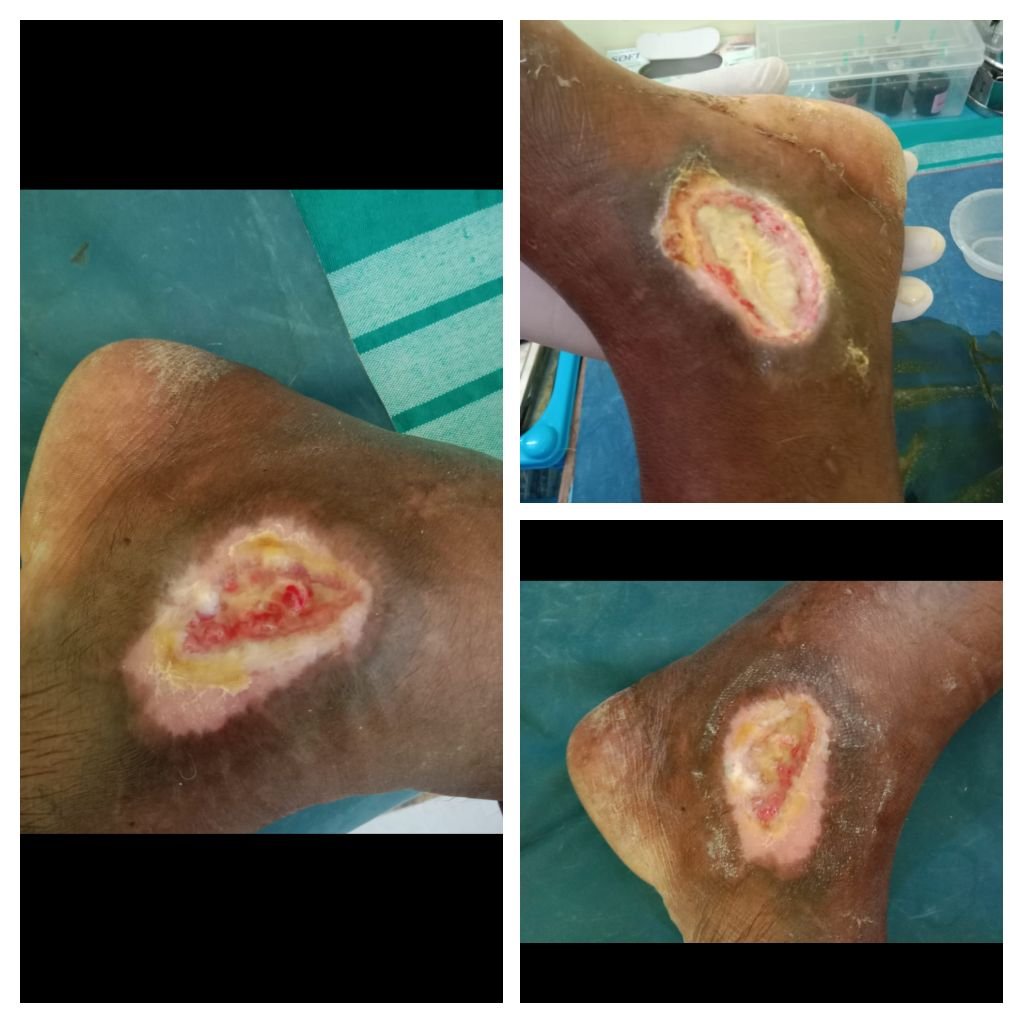
Diabetic Foot Ulcers Can Heal — With the Right Care & Blood Sugar Control! 🩺✨ Swipe to see the healing journey of our patient who presented with a severe, non-healing ankle ulcer. The Initial Stage (Day 1): Deep ulcer with thick slough and stalled healing edges. High risk of deep tissue infection and prolonged non-healing. The Treatment Approach: Healing a diabetic wound requires treating both the outside and the inside: Targeted Wound Management: Regular sterile cleaning, appropriate debridement, and modern moisture-retentive dressings. Strict Glycemic Control: You cannot heal the wound if blood glucose remains high. Uncontrolled sugar stiffens arteries, harms nerve function, and delays cell repair. Targeted Diabetic Nutrition: Adequate Protein: Essential building blocks (dal, paneer, eggs, lean meats, sprouts) to rebuild healthy tissue. Low Glycemic Index (GI) Carbohydrates: Whole grains, millets, and vegetables instead of refined flours and sweets. Micro-nutrients: Vitamin C and Zinc to support collagen formation and tissue regeneration. Hydration: To maintain cellular perfusion. The Progress (Current Status): Notice the contracture of the wound edges, healthy pink-red granulation tissue, and strong re-epithelialization filling in from the borders. Key Takeaway for Diabetic Patients: Never ignore a callus, blister, or small cut on your feet. Daily foot inspection, prompt medical attention, and strict diet control can prevent complications and save limbs. 📍 Consult early. Heal effectively. 📞 For appointments & diabetic wound consultations, contact Samy Clinic
Comments
No comments yet. Be the first to start the conversation.